
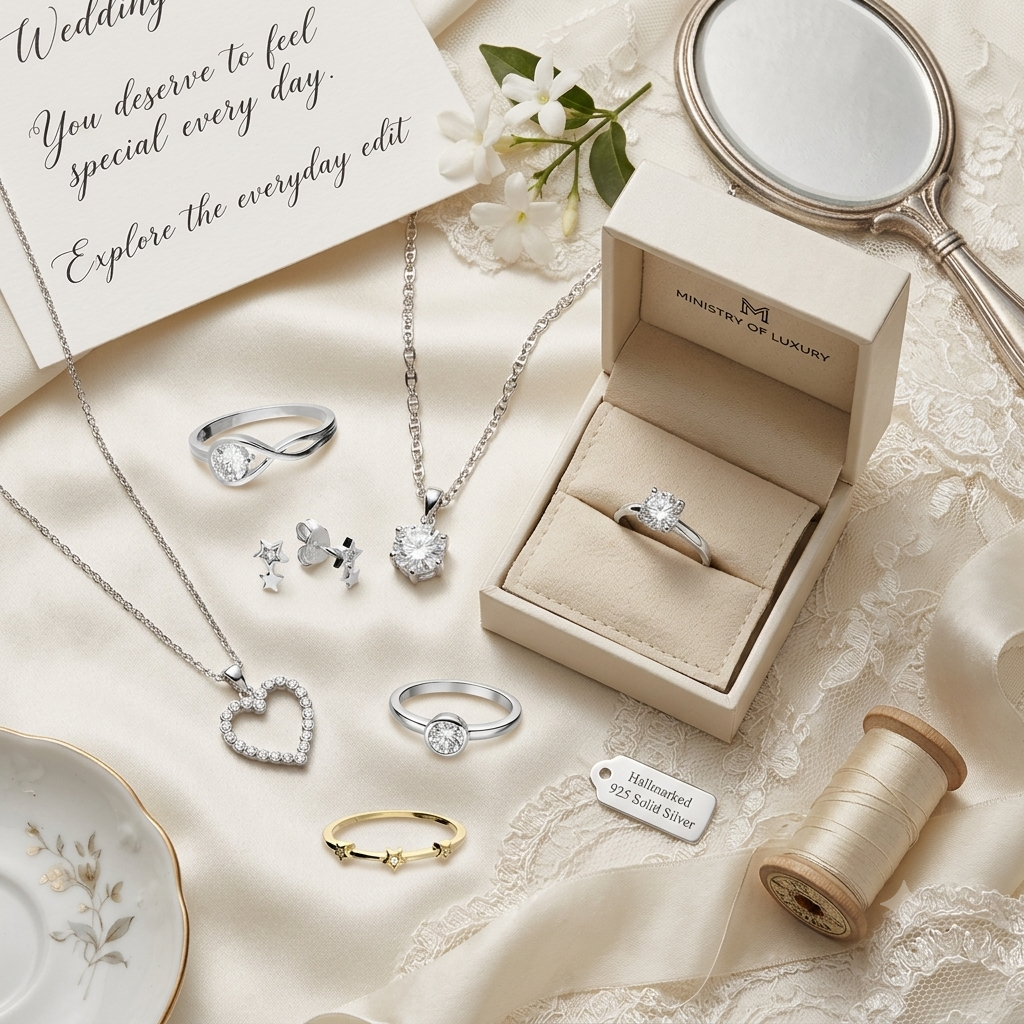
Quality Is Visible Before You Put a Piece On
You do not need a jeweller's loupe or a background in metallurgy to spot the difference between well made silver and a piece that is cutting corners. Good and bad silver feel different, look different, and behave differently under a few seconds of simple scrutiny. Here is what to check before you buy, and what it should tell you.
Weight
Pick the piece up and pay attention to how it sits in your hand. Good silver has weight that feels right for its size. Hollow or heavily plated pieces often feel unexpectedly light, a sign that there is less actual material behind the price tag than the listing suggests. A Sterling Silver Cross Pull-Through Earrings (£15.99) is a good example of weight matching both price and material claim, solid enough to feel substantial without straying into costume jewellery territory.
Clasp Quality
The clasp is one of the most honest indicators of overall build quality, mainly because it is the part doing the most mechanical work. A lobster clasp should open smoothly with a firm spring action and close with a clean, audible click. If it feels stiff, gritty, or loose, that is usually a sign of thin metal or a poorly finished mechanism. Spring rings, the small round clasps often found on cheaper necklaces, tend to weaken and fail within months of regular wear, which is why they are best avoided on anything you plan to keep long term. The Sterling Silver Infinity Necklace (£45.99) uses a solid lobster clasp, chosen specifically because it holds up to daily use rather than just looking the part in a photograph.
Surface Finish
Run your eye, and then a fingernail, along the surface of a piece. Good plating and good solid silver alike should be even across every visible surface, with no dull patches, no colour shift between sections, and no rough seams where the metal has been joined. When you run a fingernail gently along a link edge or chain seam, you should not feel any change in texture. A snag, ridge, or gritty patch usually means the finishing process was rushed, and it is often the first place wear will show.
Prong Security
If a piece has a set stone, whether cubic zirconia, moissanite, or something else, prong security tells you a great deal about how carefully it was made. Push gently on the stone from the side. If it moves at all, the setting is loose and the stone is at risk of falling out with normal wear. The Sterling Silver Cubic Zirconia Baguette Stud Earrings (£24.99) has four prongs per stone, aligned evenly around each baguette, which is exactly what you want to see when checking any stone set piece for security.
Flexing for Rattles
Finally, flex the piece gently, particularly if it is a bracelet or a chain with multiple linked elements. Solid, properly soldered links should stay silent under light flexing. Any rattling, clicking, or looseness usually means a link has not been fully closed or soldered, which is a weak point that will only get worse over time. The Sterling Silver Pink Crystal Flower Stud Earrings (£22.99) and the Sterling Silver Ballerina Charm (£21.99) both pass this test cleanly, with no movement or noise where there should be none.
The Takeaway
None of these checks take more than a few seconds, and none require any special equipment. Weight, clasp action, surface finish, prong security, and a simple flex test will tell you almost everything you need to know about how a piece of silver jewellery was made, and how long it is likely to last. Quality tends to announce itself quietly, in the details that most people never think to check.